Legal Consultant India
2025-12-01
Criminal
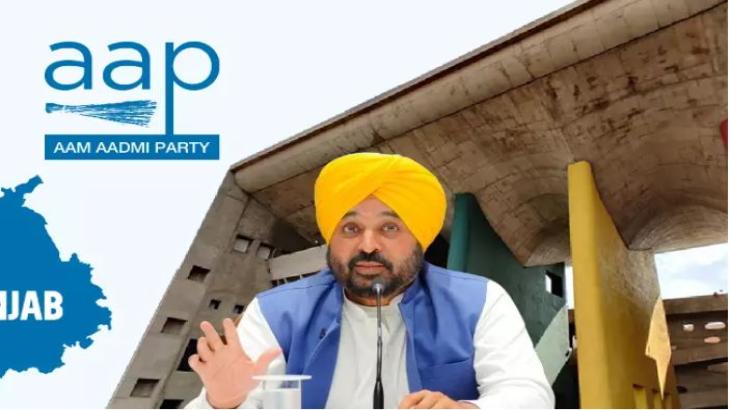
High Court Quashes Rioting FIR Against Punjab CM Bhagwant Mann, AAP Leaders Over 2020 Protest
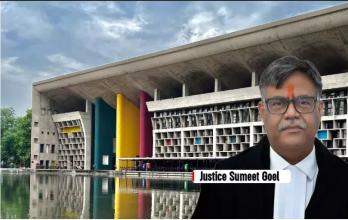
The Punjab & Haryana High Court has quashed an FIR and all consequential proceedings against several Aam Aadmi Party (AAP) leaders including Punjab CM Bhagwant Mann arising from a 2020 protest in Chandigarh during Congress government, holding that no prima facie case existed against them and that the alleged offences under the IPC were not made out. The Court quashed the FIR and the chargesheet filed under Sections 147 (rioting), 149 (unlawful assembly), 332 (causing hurt to public servant), and 353 (assault) IPC. Also Read - Punjab & Haryana High Court Directs CBDT To Issue Circular Extending ITR Due Date For Audit Cases To 30.11.2025 For A.Y. 2025-26 Justice Tribhuvan Dahiya said, "There was no reason for the police to stop the protestors from marching ahead towards the Chief Minister's residence, as admittedly prohibitory order under Section 144 Cr.P.C. had not been issued. Nobody has been named from amongst the persons present who allegedly pelted stones on the police force. Besides, it is not the case that the petitioners asked them to do so." Also Read - Detained MP Amritpal Singh Moves Punjab & Haryana High Court After State Denies Parole To Attend Parliament's Winter Session The Court said that, "the nature of alleged instigation by the petitioners has also not been mentioned; nor have specific words or gestures of any kind been attributed to them. Therefore, there is no basis to ascribe the alleged act of throwing stones by the mob to the petitioners. It is a case where no act, voluntary or otherwise, has been attributed to the petitioners. Instead, the allegations are that on shooting mild water on the mob they started pelting stones which hit the officials present there." Also Read - P&H High Court Quashes Rejection Of Compassionate Assistance; Says Employee Deemed To Have Died In Service After Dismissal Order Was Quashed It added that, the immediate trigger for the mob turning furious and behaving the way it did, appears to be shooting of water on them as per orders of the Duty Magistrate. The nature of injuries suffered by the officials are, abrasions, pain and swelling which could be the result of shoving and jostling by the mob in an effort to push its way ahead. The bench opined that, "investigating agency has failed to come up with any material indicating any definite role to the petitioners in this regard as well. Section 332 IPC pertains to 'voluntarily causing hurt to deter public servant from discharging his duty', and Section 353 IPC to 'assault or use of criminal force to deter public servant from discharge of his duty." Also Read - 'Rely Only On Authenticated Legal Precedents': Punjab & Haryana High Court Calls For Training Trial Judges On Use Of Online Tools Justice Dahiya highlighted that the petitioners have not been specifically accused of voluntarily causing any assault, hurt or using criminal force to deter the public servants from discharging duties. The nature of injuries suffered by the officials also dispels any role of the petitioners, as the same appear to be a result of grappling and pushing, they judge added. Background The FIR was registered in 2020 on the complaint of L/C Manpreet Kaur, who alleged that during an AAP rally protesting the rise in electricity tariffs, senior party leaders—including Bhagwant Mann, Harpal Cheema, Meet Hayer, Baljinder Kaur, Aman Arora, and others—had incited 750–800 workers to march towards the Punjab Chief Minister's residence in Sector 2, Chandigarh. Police officials deployed at barricades alleged that the crowd became aggressive, attempted to break the barricades, and later pelted stones when water was sprayed on them. Several police officials reported simple injuries, as reflected in their Medico Legal Reports (MLRs). The Senior counsel for the petitioners Dr. Anmol Rattan Sidhu argued that no specific overt act or role was attributed to any of the petitioners and all injuries were simple abrasions and pains, consistent with jostling in a crowd. In absence of any orders under Section 144 CrPC, the assembly could not be termed “unlawful.” Deletion of Section 188 IPC was done to evade the mandatory requirement of a written complaint by a public servant under Section 195(1)(a) CrPC, he added. The UT Chandigarh PP Manish Bansal argued protestors obstructed police officers on duty and used force and injuries sustained by police officials were supported by MLRs. Deletion of Section 188 IPC did not invalidate the FIR, as Section 195 CrPC applies only at the stage of cognizance and not investigation. The Court mainly considered two legal issues: 1. When Section 195 CrPC applies 2. Whether offences could be split by deleting Section 188 IPC Relying extensively on the Supreme Court's recent judgment in Devendra Kumar v. State (NCT of Delhi) (2025), the Court reaffirmed that, Section 195 CrPC bars taking cognizance, not registration or investigation. The Court said that if offences under Section 188 IPC and other IPC provisi